
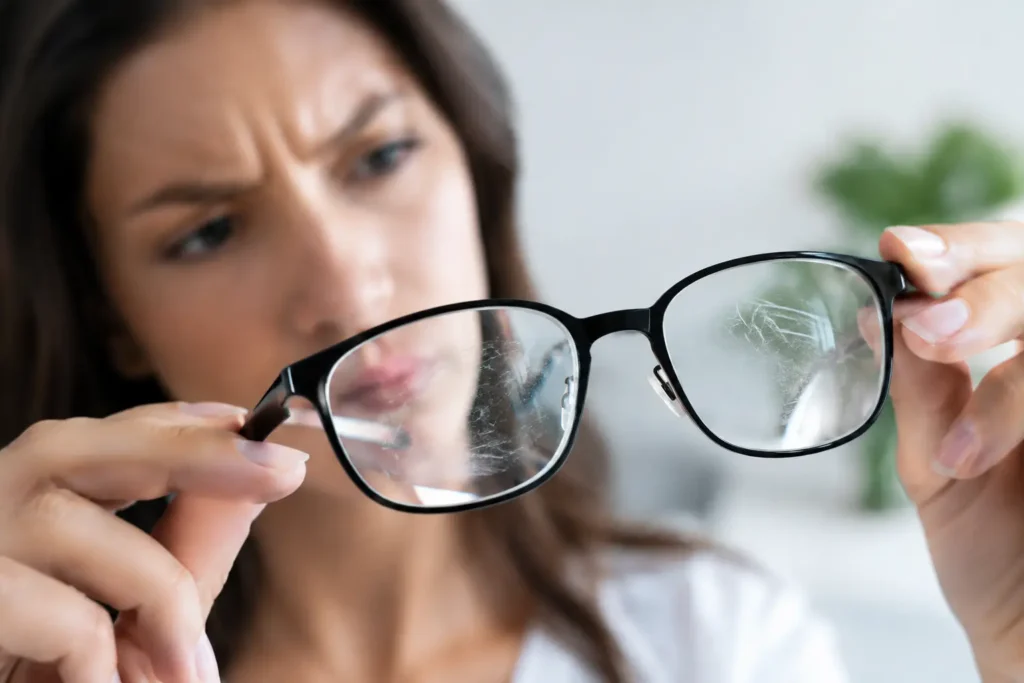
Those fine, branching lines can be frustrating, especially when your glasses otherwise seem perfectly usable. If you have found yourself asking, “how did I get the ‘spider webs’ on my lenses?” you are likely seeing a type of lens damage commonly called crazing. It may look like a delicate web, a cluster of tiny cracks, or a hazy pattern that becomes most noticeable in sunlight, while driving at night, or when a screen is bright.
The reassuring news is that this pattern is usually related to the lens coating, not an issue with your eyes. Still, it can affect clarity and comfort enough that replacing the lenses may be the best answer.
What are the “spider webs” on eyeglass lenses?
Most modern prescription lenses have more than one treatment applied to their surface. An anti-reflective coating can reduce glare and reflections, while scratch-resistant and UV-protective treatments help lenses perform better day to day. Crazing occurs when the surface coating develops a network of very fine fractures.
Unlike a single, obvious scratch, crazing can appear beneath the surface or across a broader area of the lens. At first, you may only notice it when you tilt your glasses under a lamp. Over time, the pattern can scatter light and make vision feel less crisp, particularly in glare-prone settings such as nighttime driving.
It is worth separating lens crazing from a prescription change. A new prescription need may cause eyestrain, headaches, or blurry vision throughout the day. Crazing tends to remain visible on the lens itself when you inspect it closely, even after cleaning.
How did I get “spider webs” on my lenses?
Heat is one of the most common causes. Lens coatings and the lens material underneath them can expand at different rates when exposed to high temperatures. Repeated or intense heat can stress that bond, creating the fine cracking pattern people describe as spider webs.
This can happen more easily than many people realize. Leaving glasses in a hot car, placing them near a heater, opening a hot oven while wearing them, or using high heat around the face can all contribute. Steam from cooking or dishwashing is not automatically a problem, but frequent exposure to high heat and rapid temperature shifts can shorten the life of some coatings.
Age and ordinary wear also play a role. Coatings do not last forever, particularly on glasses that are worn daily, cleaned often, and exposed to changing weather. A pair that has served you well for several years may eventually show wear even with careful handling.
Certain chemicals may make the problem worse. Household cleaners, acetone, hairspray, sunscreen, and products containing strong solvents can damage or weaken lens coatings. This does not mean you need to treat your glasses as fragile. It simply means the cleaning method matters.
The quality and age of the coating, the lens material, and how the glasses are used all matter too. Two people can own similar-looking glasses and have very different experiences. Someone who works outdoors, cooks frequently, or moves between cold winter air and warm indoor spaces may expose their lenses to more stress than someone who wears glasses mainly at a desk.
Why cleaning sometimes makes it more noticeable
Crazing is not usually caused by cleaning alone, but a dry paper towel, tissue, shirt, or rough cloth can add surface scratches. Those scratches may catch the light alongside existing coating damage and make the lens look even more webbed.
For routine care, rinse your lenses with lukewarm water first to remove dust and grit. Then use a lens-safe cleaner and a clean microfiber cloth. Avoid hot water and do not use window cleaner, disinfecting wipes, or kitchen cleaners unless your optical professional has confirmed they are safe for your specific lenses.
A microfiber cloth needs care, too. If it has picked up grit or has been washed with fabric softener, it can leave smears or potentially scratch lenses. Washing it regularly and allowing it to air-dry helps keep it useful.
Can spider-webbed lenses be repaired?
In most cases, no. Once an anti-reflective or other surface coating has crazed, it cannot be restored by polishing, cleaning, or applying a home remedy. Attempting to scrub, buff, or peel away the affected coating can permanently damage the lens and may make your vision less comfortable.
Whether you need new lenses right away depends on what you see through them. If the webbing is faint and does not interfere with vision, you may be able to continue wearing the glasses for a while. If you notice glare, halos, haziness, difficulty driving at night, or frequent eyestrain, it is sensible to have the lenses assessed.
An optician can examine the pattern and help distinguish crazing from scratches, residue, or a lens defect. They can also check whether your frame is in good condition and suitable for replacement lenses. If your prescription is due for an update, combining a new eye exam with new lenses can be a practical choice.
When the webbing may not be on your glasses
Sometimes people use “spider webs” to describe shapes they see floating in their vision rather than marks they can see on the lens. These may be floaters, which are small shadows cast by changes inside the eye. Floaters can be common, especially with age or nearsightedness, but a sudden increase deserves attention.
Contact an eye care professional promptly if you experience new or numerous floaters, flashes of light, a dark curtain or shadow in your field of view, sudden blurred vision, or eye pain. These symptoms can signal an eye health concern that should not be dismissed as a lens problem.
A simple test can help clarify the difference: take your glasses off and look at a plain, bright background. If the web-like spots move with your gaze or remain visible without your glasses, they may be coming from inside the eye rather than from the lenses. If the pattern stays fixed on the lenses when you hold them up to a light, coating damage is more likely.
Help your next lenses last longer
You cannot prevent every bit of wear, but a few habits can reduce unnecessary stress on your lenses. Keep glasses in a hard case when they are not on your face, rather than leaving them loose in a bag or on a car dashboard. Avoid exposing them to high heat, and do not rest them on top of a hot appliance or near a heat source.
Use both hands when removing your glasses so the frame stays properly aligned. Rinse and clean lenses gently, and ask your optical team which coating options best suit your routine. A parent managing active kids, a commuter who drives after dark, and someone who spends long hours outdoors may each benefit from different lens materials and treatments.
At Sight Care Optometry & Optical, a personalized lens consultation can help match your eyewear to the way you actually live, work, and see. The right recommendation is not always the most elaborate option. It is the one that provides clear, comfortable vision and fits your daily habits.
If your lenses are showing spider-web patterns, bring them in rather than guessing or trying to fix them at home. A quick professional look can tell you whether a careful cleaning, an adjustment, or replacement lenses will give you the clearest path forward.
Note: This posting is for informational purposes only and does not attempt to diagnose or recommend treatment for any condition. Please consult an optometrist if you are experiencing eyesight issues.