
A pair of eyeglasses can have the right prescription and a frame you love, yet still feel distracting in certain light. Headlights at night, overhead office lighting, a bright window during a video call, or glare bouncing off a snowy sidewalk can all create reflections on your lenses. The benefits of anti-reflective coatings for everyday eyewear are most noticeable in these ordinary moments: vision can feel clearer, eyes may feel more comfortable, and your lenses look less reflective to the people looking at you.
An anti-reflective coating, often called AR coating, is a thin treatment applied to lens surfaces to reduce the amount of light that bounces back toward your eyes or reflects off the front of your glasses. It is not just a cosmetic add-on. For many people, it is a practical lens feature that supports clearer, more comfortable day-to-day vision.
Anti-Reflective Coatings: Benefits for Everyday Eyewear
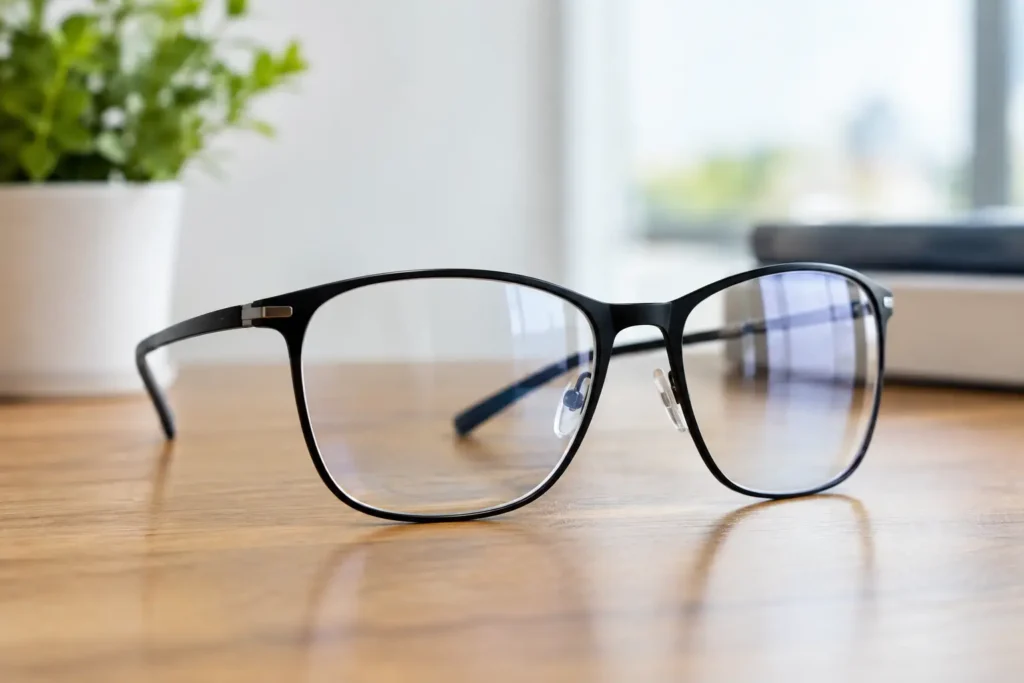
Every lens reflects some light. Without a coating, those reflections can compete with the image you are trying to see. AR coatings reduce this reflected light and allow more useful light to pass through the lenses. The result is often sharper-looking vision, especially when lighting is uneven or bright.
This can make a meaningful difference for people who wear glasses all day. Whether you are moving between meetings, helping children with homework, checking a phone, commuting, or enjoying dinner with friends, your eyes are constantly adjusting to changing light. Reducing lens reflections can make those transitions feel less visually busy.
Clearer vision in challenging light
Glare is not only an inconvenience. It can obscure details, lower contrast, and make it harder to focus. AR coatings are particularly helpful when driving at night, when headlights, streetlights, and wet roads may create distracting reflections. They can also be useful indoors, where bright ceiling fixtures and computer monitors create light from multiple directions.
The coating does not give you night vision, eliminate all glare, or replace a current prescription. If night driving remains uncomfortable or you notice halos, blur, light sensitivity, or a sudden change in vision, an eye examination is the right next step. Still, for many patients with an up-to-date prescription, an AR coating makes everyday light sources less intrusive.
Less strain from lens reflections
When your eyes repeatedly work around reflected light, visual tasks can feel more tiring. This is especially familiar to people who spend long hours on digital devices or move between screens and paperwork. An anti-reflective coating can reduce reflections from the lens itself, helping create a cleaner view of the task in front of you.
It is worth keeping expectations realistic. Eye fatigue can have several causes, including dry eye, an outdated prescription, uncorrected astigmatism, poor lighting, and long periods of close work without breaks. An AR coating can be part of a more comfortable eyewear setup, but it is not a standalone solution for every cause of discomfort.
A more natural appearance
One of the first things people notice about AR-coated lenses is how they look. Standard lenses can reflect overhead lights, windows, or a camera flash, sometimes partially hiding your eyes. With fewer visible reflections, your eyes are easier to see through the lenses.
That matters in person and on screen. For professionals on video calls, students presenting in class, or anyone who simply wants their eyewear to complement rather than compete with their expression, the effect can be subtle but welcome. It also lets the color, shape, and details of a thoughtfully chosen frame stand out more clearly.
Who may benefit most from AR-coated lenses?
Almost anyone who wears prescription glasses can consider an anti-reflective coating, but it is especially valuable for certain routines and lens types. People who drive frequently at night, work under bright lighting, use digital devices often, or spend time in visually demanding environments commonly appreciate the difference.
High-index lenses are another strong case. These thinner, lighter lenses are often recommended for stronger prescriptions, but they naturally reflect more light than standard plastic lenses. An AR coating helps manage those reflections and lets more light pass through the lens, supporting both appearance and visual clarity.
Children and teens may benefit as well, particularly if they wear glasses for school, sports on the sidelines, or regular device use. The right choice depends on their activities and how likely the glasses are to encounter fingerprints, backpacks, and busy family routines. A durable coating package can be useful, but parents should also know that no coating makes lenses indestructible.
What to look for beyond glare reduction
Many modern anti-reflective coatings are sold as multi-layer treatments. In addition to reducing reflection, they may include a hard coat to improve scratch resistance and a top layer designed to repel water, oil, and smudges. These features can make lenses easier to clean and help them maintain a clearer appearance through the day.
The details vary by lens manufacturer and coating tier. A premium AR option may offer better smudge resistance, easier cleaning, or a longer warranty than a basic version. It is reasonable to ask what is included, how the coating is covered, and whether it suits the way you use your glasses.
A few practical questions can make the decision easier:
- Do you drive at night or in rainy conditions often?
- Do overhead lights, screens, or reflections bother you during work?
- Are you choosing thinner high-index lenses for a stronger prescription?
- Do you want your eyes to be more visible in photos and video calls?
If the answer is yes to one or more of these, AR coating is often worth discussing as part of your lens recommendation.
AR coating is not the same as blue-light filtering
These lens options are sometimes grouped together, but they serve different purposes. An anti-reflective coating reduces reflections on the lens surface. A blue-light filtering lens treatment is designed to filter a portion of blue light, depending on the product. Some lenses include both features, while others do not.
For screen comfort, the basics still matter: a current prescription, appropriate lighting, good screen positioning, regular blinking, and breaks from close work. If your eyes feel dry, tired, or blurry after screen use, a personalized eye exam can help identify whether your lenses, visual habits, or eye surface health need attention.
Caring for anti-reflective lenses
AR-coated lenses are durable, but they deserve gentle care. Rinse away dust or grit before wiping lenses, then use a clean microfiber cloth and lens cleaner recommended for eyewear. Dry tissues, paper towels, clothing, and household cleaners can leave fine scratches or damage lens coatings over time.
Heat can also be hard on lenses and coatings. Avoid leaving glasses on a car dashboard, near a heater, or in other high-heat environments. Store them in a protective case when they are not on your face, especially if they travel in a purse, backpack, or glove compartment.
Even with careful use, coatings can eventually show wear. Peeling, crazing, persistent haze, or scratches that interfere with vision are good reasons to have your glasses assessed. Sometimes a repair or adjustment helps; other times, replacement lenses are the better choice.
Choosing lenses around your real routine
The best eyewear decisions begin with how you actually spend your day, not with a one-size-fits-all lens package. Someone who drives after dark may prioritize glare reduction. Someone who works on camera may value a clearer appearance. A child may need an easy-to-clean, durable option, while a person with a stronger prescription may benefit from pairing AR coating with thinner lenses.
At Sight Care Optometry & Optical, lens recommendations are made with your prescription, eye health, work habits, comfort, and personal style in mind. A thoughtful conversation can help you choose features that make a real difference without paying for options that do not fit your needs.
Your glasses should support the way you live, from the morning commute to the last task of the day. If reflections regularly get in the way, anti-reflective coating may be one of the simplest changes you can make for a clearer, more polished eyewear experience.
Note: This posting is for informational purposes only and does not attempt to diagnose or recommend treatment for any condition. Please consult an optometrist if you are experiencing eyesight issues.