
A new pair of glasses can make a meaningful difference in how you see, work, drive, and feel. Yet many of the common habits that can damage your eyeglasses happen in ordinary moments: setting them down between meetings, cleaning a smudge quickly, or pushing them up after they slip. Small actions can leave lenses scratched, coatings worn, frames bent, or screws loose long before their time.
The good news is that most eyewear damage is preventable. A few simple changes can help protect both the function and style of your glasses, whether you wear them all day, only for reading, or as a favorite fashion accessory.
Common Habits That Can Damage Your Eyeglasses
Wearing them on top of your head
Resting your glasses on top of your head is convenient, but it puts pressure on the temples and can gradually stretch the frame. This may cause glasses to slide down your nose more often or sit unevenly on your face. For some frame materials, especially lighter plastic styles, repeated stretching can also affect the frame’s shape.
If you need to take your glasses off for a moment, place them in a case or fold them and set them lens-side up on a stable surface. This is particularly helpful with sunglasses, which are often worn on and off throughout the day.
Setting lenses directly on a table or desk
It only takes one quick placement on a countertop, bedside table, or restaurant table to create a small scratch. Even a surface that looks clean may have dust, grit, or crumbs that can rub against the lenses. Over time, these tiny marks can make vision less crisp and more distracting, especially while driving at night or using a computer.
Make a habit of placing your glasses with the lenses facing up. Better yet, keep a hard case in your bag, car, or desk drawer. A case offers far more protection than a soft pouch when glasses are likely to be bumped or compressed.
Cleaning dry lenses with a shirt, tissue, or paper towel
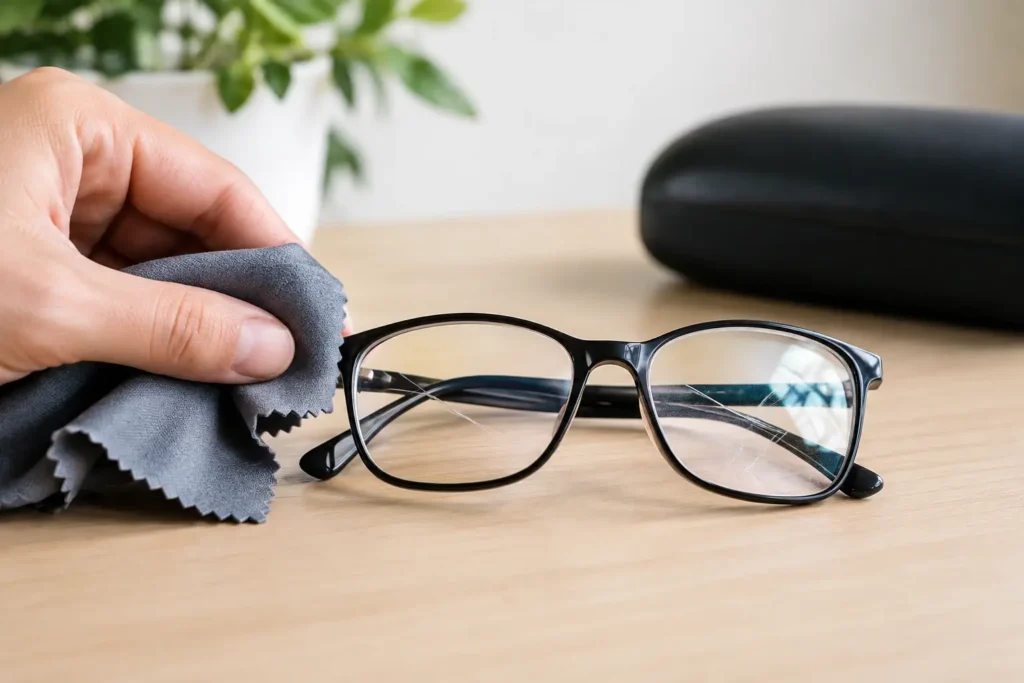
When a fingerprint appears in the middle of your lens, it is tempting to wipe it away with the nearest shirt hem or tissue. The problem is that fabric fibers, paper products, and dry dust can act like fine sandpaper. They may leave micro-scratches that are difficult to see at first but gradually affect lens clarity.
Paper towels and napkins can also be rougher than they feel, while some clothing holds residue from detergent, skin oils, or makeup. For everyday cleaning, rinse the lenses with lukewarm water first to remove loose particles. Then use a small amount of lens-safe cleaner and a clean microfiber cloth. Avoid hot water, which may affect certain lens coatings.
Leaving glasses in a hot car
A parked car can get very hot, even on a mild-looking day. Excessive heat may warp some frames, weaken adhesives, and put stress on lens coatings. Plastic frames are especially vulnerable to losing their fit or shape when exposed to prolonged heat.
The dashboard is one of the riskiest places to leave eyewear because it combines direct sunlight with high temperatures. If you need to keep a spare pair in the car, store it in a protective case away from the windshield and bring it inside whenever possible.
Using household cleaners on your lenses
Window cleaner, disinfecting wipes, hairspray, and cleaning sprays are not designed for prescription lenses. Many contain alcohol, ammonia, or other ingredients that may damage anti-reflective, blue-light filtering, or photochromic coatings. The result can be a hazy or blotchy appearance that cannot always be polished away.
Use products made specifically for eyewear, and ask your optometry team which cleaning method is right for your lens type. This matters even more if your glasses have specialized coatings or high-index lenses, which are chosen for their lighter feel and thinner appearance.
Taking glasses off with one hand
Removing your glasses with one hand may seem harmless, but it can twist the frame over time. That uneven pressure can loosen hinges, misalign the temples, or cause the frame to sit crookedly. A slightly uneven fit can also create pressure points behind the ears or on the bridge of the nose.
Whenever you can, use both hands to put glasses on and take them off. It is a small adjustment that helps preserve the alignment your optician carefully set for you.
Sleeping in your glasses
Falling asleep while reading or watching a show happens. However, sleeping in glasses creates a high risk of bent frames, broken nose pads, popped lenses, and facial discomfort. Even if the frame looks fine afterward, it may no longer fit as evenly as it did before.
If you regularly read in bed, keep a case within reach on your nightstand. It makes putting your glasses away just as easy as setting them down, with much less risk.
Letting them rattle around in a bag
A purse, backpack, diaper bag, or gym bag can be tough on eyewear. Keys, chargers, pens, loose change, and other everyday items can scratch lenses or press on a frame. Soft cases can prevent surface scuffs, but they do not provide much protection from crushing pressure.
A sturdy hard case is the better choice when glasses travel with you. For children, a case that is easy to open and close can encourage them to use it consistently. It also helps to choose one bright enough to spot quickly in a busy school bag.
Everyday Habits That Protect Lenses and Frames
Eyeglasses are personalized medical devices as well as part of your personal style. The right care routine protects the prescription, lens treatments, and fit you selected. Start with a clean microfiber cloth, and wash it regularly according to its care instructions. A cloth that has collected dust or lotion can transfer debris back onto the lenses.
It also helps to give your glasses a quick visual check every few days. Look for smudges that will not clean away, loose screws, a temple that feels uneven, or nose pads that have shifted. Addressing a minor fit issue early is usually simpler than waiting until the frame is visibly bent or uncomfortable.
Do not try to force a frame back into shape at home, particularly if it is metal, rimless, or made from a more delicate material. Frames can be adjusted, but they need to be handled with the right tools and an understanding of where pressure can safely be applied. A professional adjustment can restore comfort without putting the frame at greater risk.
Be mindful around water and products
Your glasses do not need to be treated as fragile, but they benefit from a little awareness. Remove them before swimming, showering, or using hairspray and styling products. Chlorine, saltwater, steam, and cosmetic residue can all leave buildup on lenses and frames.
For active days, consider whether a dedicated sports frame, strap, or prescription sunglasses may better suit the activity. The best eyewear choice depends on how you use it. A lightweight office frame may be perfect for work but not ideal for a weekend bike ride or a child’s soccer practice.
When to Have Your Glasses Checked
If your vision seems blurry even after cleaning your lenses, the issue may be more than a surface smudge. Scratches, coating damage, a shifted frame, or a prescription change can all affect how well you see. Headaches, squinting, eye strain, or needing to reposition your glasses repeatedly are also good reasons to have them assessed.
At Sight Care Optometry & Optical, a careful eyewear check can help determine whether your glasses simply need an adjustment, a repair, new lenses, or an updated prescription. This is especially worthwhile for children whose visual needs can change as they grow, and for adults noticing changes in near vision, driving comfort, or screen use.
Your glasses support many of the moments that fill your day. Treating them with a bit of care helps them stay comfortable, clear, and ready when you need them most.
Note: This posting is for informational purposes only and does not attempt to diagnose or recommend treatment for any condition. Please consult an optometrist if you are experiencing eyesight issues.