
A child can recognize a favorite face across the room long before they can explain that the room looks blurry. That is why parents often ask, “when should children get first eye exam?” Waiting for a child to complain can mean waiting too long, especially when a vision concern affects only one eye or has simply become their normal.
A first eye exam is not just about whether your child can read letters from across the room. It is an opportunity to check how their eyes focus, move together, develop, and support the skills they use for play, reading, sports, and learning. Early care offers reassurance when everything is on track and a clear plan when it is not.
When Should Children Get Their First Eye Exam?
Many eye care professionals recommend a comprehensive eye exam during a baby’s first year, often between 6 and 12 months of age. This early visit gives an optometrist a chance to assess healthy visual development, eye alignment, focusing ability, and the overall health of the eyes.
The next common milestones are around age 3 and again before a child begins kindergarten or first grade. School-age children should continue with regular eye exams, typically every year or as their optometrist recommends. Children with glasses, contact lenses, a family history of eye disease, developmental concerns, or a higher risk of nearsightedness may need more frequent visits.
These are helpful guidelines, not a reason to postpone an appointment if you have concerns. A child who is squinting, struggling to track a moving ball, or avoiding books deserves an eye exam now, regardless of where they are on the calendar.
Why a vision screening is not the same as an eye exam
School, pediatrician, and community vision screenings are valuable. They can identify some children who may need follow-up care. But a screening is designed to be quick, and it cannot replace a complete exam with an optometrist.
A comprehensive pediatric eye exam looks beyond visual acuity. Your child’s optometrist evaluates whether the eyes work as a coordinated team, how comfortably they focus at near and far distances, whether there are early signs of eye health concerns, and whether a prescription could make daily tasks easier. A child may pass a basic screening while still having an issue with eye teaming, focusing, depth perception, or an uneven prescription between the two eyes.
That distinction matters because young children often adapt remarkably well. If one eye sees clearly and the other does not, they may not realize anything is different. An eye exam can detect concerns such as amblyopia, sometimes called lazy eye, and strabismus, an eye turn, while treatment is most effective during the early developmental years.
Signs Your Child May Need an Eye Exam Sooner
Children do not always connect how they feel with how they see. Instead of saying, “My vision is blurry,” they may change their behavior. Look for patterns rather than a single tired day after a busy week.
Schedule an exam promptly if you notice four or more of these signs:
- Frequent squinting, blinking, eye rubbing, or headaches
- Holding books, tablets, or toys unusually close to the face
- Covering or closing one eye, tilting the head, or turning the face to see
- Losing their place while reading, avoiding close work, or tiring quickly during homework
- Sitting very close to the television or struggling to see the board at school
- An eye that drifts inward or outward, especially after 4 months of age
Also trust your instincts. A teacher may mention that your child is not paying attention, reads more slowly than expected, or seems reluctant to participate in ball sports. These observations do not automatically mean there is a vision problem, but an eye exam is a practical way to rule out one possible barrier.
An eye that suddenly turns, a painful red eye, sensitivity to light, an injury, or a sudden change in vision calls for urgent professional advice. Eye emergencies should not wait for a routine appointment.
What Happens at a Child’s First Eye Exam?
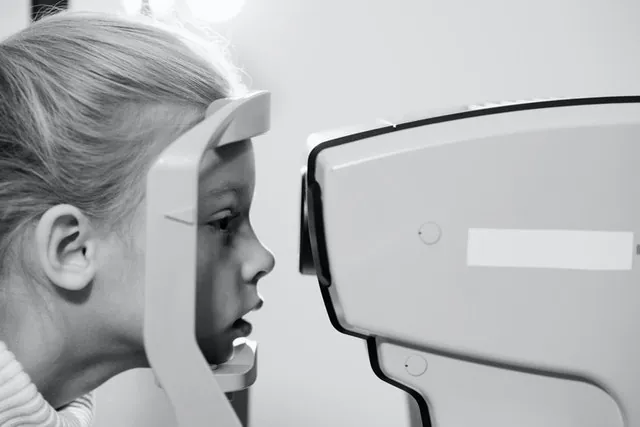
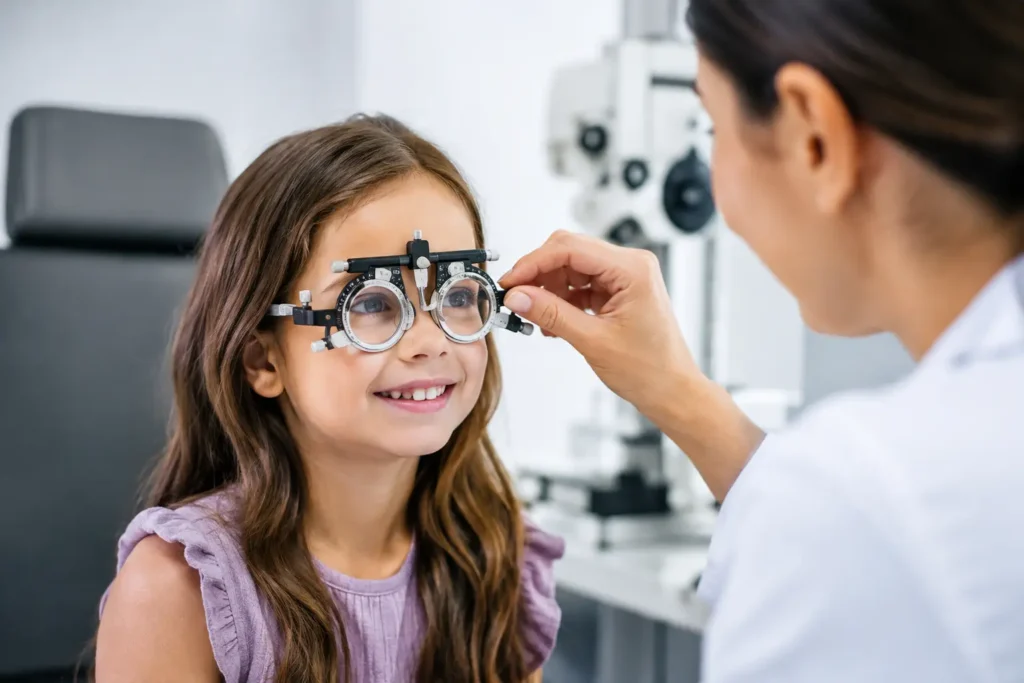
A pediatric eye exam is designed around the child in the chair, not around a rigid adult-style test. Babies may be assessed through their response to lights, objects, and movement. Preschoolers may identify pictures or matching symbols instead of letters. Older children may read a familiar eye chart and answer questions about how their eyes feel at school or during screen time.
The optometrist will review your child’s health history, development, medications, and family eye history. Nearsightedness, eye turns, amblyopia, glaucoma, and certain retinal conditions can have a family connection, so details about parents, siblings, and close relatives are useful.
The exam may include checking vision at different distances, eye movement and alignment, focusing, depth perception, color vision when appropriate, and the health of the front and back of the eye. Depending on your child’s age and findings, dilating drops may be recommended to give the optometrist a more accurate view inside the eyes and measure the prescription properly.
Drops can briefly make eyes sensitive to light and blur near vision, which is why sunglasses and a quieter schedule afterward can help. Your optometrist should explain what is being checked and why, so there are no surprises.
Helping Your Child Feel Comfortable
A relaxed visit starts before you arrive. Tell your child they are going to meet an eye doctor who will look at how their eyes work. Avoid presenting the visit as a test they can pass or fail. It is simply a health check, much like visiting the dentist or pediatrician.
Bring any glasses your child currently wears, along with relevant medical information. If they have received notes from school or have trouble with a specific activity, share those examples. “She loses her place after ten minutes of reading” is more helpful than a general sense that reading has been frustrating.
For younger children, scheduling at a time when they are usually rested and fed can make a real difference. A favorite small toy, snack for afterward, or a parent’s calm presence can also turn an unfamiliar appointment into a positive experience.
If glasses are recommended, involve your child in the selection process. Comfortable frames that fit well are more likely to be worn consistently. The right pair should sit securely on the nose, align properly with the eyes, and suit an active child’s routine. Style matters, too. When children feel good in their glasses, wearing them can become part of their confidence rather than a daily negotiation.
The Growing Role of Myopia Management
Nearsightedness, or myopia, often begins during school-age years and can progress as children grow. A child with myopia may see books and devices clearly but have trouble seeing the board, faces across a field, or signs in the distance. More time indoors, increased near work, and family history may all be part of the picture.
Standard glasses correct blurry distance vision, but some children may also be candidates for myopia management. This care aims to slow the progression of myopia through options such as specially designed lenses, contact lenses, or other treatments recommended by an optometrist. The right approach depends on your child’s age, prescription, eye health, lifestyle, and ability to follow the plan.
Not every child needs myopia management, and no single option is right for every family. What matters is measuring changes over time and having an informed conversation early, rather than assuming stronger glasses are the only next step.
Make Eye Care Part of Your Family’s Routine
Clear vision supports far more than report cards. It helps children recognize expressions, build coordination, explore confidently, and enjoy the small daily moments that shape childhood. Regular exams also create a familiar relationship with eye care, making future visits feel routine instead of stressful.
If your child has never had a comprehensive eye exam, the best time to schedule one is before a concern becomes harder to spot. A welcoming, thorough visit can give you answers, help your child feel seen and comfortable, and keep their vision supported as they grow.
Note: This posting is for informational purposes only and does not attempt to diagnose or recommend treatment for any condition. Please consult an optometrist if you are experiencing eyesight issues.