
You may notice small changes first: needing more light to read a menu, squinting at road signs, or ending the workday with tired, dry eyes. Those moments are a good reason to schedule a visit to your Optometrist, but they are only part of the picture. Understanding what happens during an adult eye exam can make your appointment feel far more comfortable – and help you see why a thorough exam looks beyond the letters on the chart.
An adult eye exam checks how clearly you see, how comfortably your eyes work together, and whether there are early signs of eye disease. Many conditions, including glaucoma and diabetic eye changes, can develop with few noticeable symptoms at first. Your optometrist combines conversation, careful testing, and modern imaging when needed to build a complete view of your eye health.
What happens during an adult eye exam?
No two exams are exactly alike. Your optometrist will tailor the visit to your age, medical history, symptoms, prescription needs, and lifestyle. Someone who spends long hours on screens may need a different conversation than a contact lens wearer, a driver who struggles with nighttime glare, or a patient managing diabetes.
Most appointments begin with a warm discussion about how your vision feels in everyday life. You may be asked whether you have noticed blur, headaches, eye strain, flashes of light, floaters, redness, dryness, double vision, or trouble seeing at night. Share even changes that seem minor. They can help direct the examination.
Your optometrist will also review your health history, medications, past eye injuries or surgeries, and family history of conditions such as glaucoma, macular degeneration, or retinal disease. Certain medications and health conditions can affect the eyes, so this conversation is an essential part of your care rather than simple paperwork.
Measuring your vision and prescription
The familiar eye chart is usually one of the first tests. You will read letters at a distance, and sometimes at near range, with each eye separately and then together. This measures visual acuity: how clearly you see at a given distance.
If you wear glasses or contact lenses, your current correction may be checked as well. Your optometrist may use an automated instrument to estimate your prescription, then refine it with the “Which is clearer, one or two?” testing you may remember from past visits. This process, called refraction, helps determine whether you are nearsighted, farsighted, have astigmatism, or are experiencing age-related changes in near vision.
The goal is not simply to give you the strongest possible prescription. A good prescription should support comfortable, functional vision for the way you live. For some people, that means clearer computer distance; for others, it means easier reading, confident driving, or sharp vision for work, sports, and hobbies.
Checking how your eyes work together
Clear vision depends on more than prescription. Your optometrist may assess how your eyes move, focus, and align. You might follow a target with your eyes, focus between near and distant objects, or have one eye briefly covered while looking at a target.
These tests can reveal issues with eye coordination, focusing ability, or depth perception. They are especially helpful if you experience headaches, fatigue with close work, intermittent blur, or double vision. Even when vision is 20/20, an eye-teaming issue can make screens, reading, or detailed tasks feel unnecessarily demanding.
Looking at the front of the eye
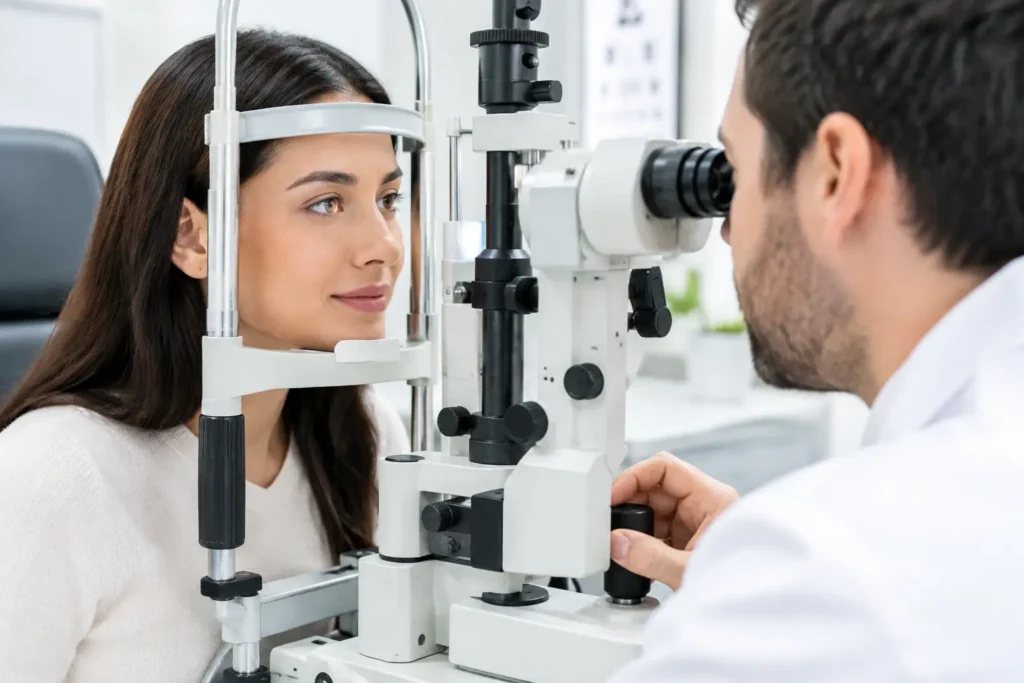
Using a slit lamp microscope, your optometrist examines the front structures of your eyes in detail. This includes the eyelids, eyelashes, tear film, conjunctiva, cornea, iris, and natural lens.
This part of the exam can identify concerns such as dry eye, allergies, eyelid inflammation, contact lens-related irritation, corneal changes, early cataracts, or signs of infection. The slit lamp is bright, but the test is painless and typically takes only a few minutes.
If dry eye is affecting your comfort, the conversation may go beyond using artificial tears. Your optometrist can consider the quality of your tear film, screen habits, contact lens routine, medications, and environmental factors. The best approach depends on the cause, which is why an exam is more useful than guessing from symptoms alone.
Measuring eye pressure
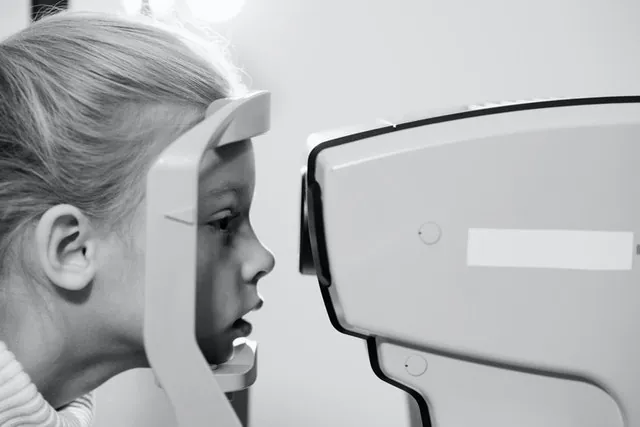
Eye pressure is often checked as part of glaucoma screening. Depending on the technology used, you may feel a gentle puff of air or have a small instrument lightly touch the surface of the eye after numbing drops are applied. Neither approach should hurt.
Higher-than-average eye pressure can be a risk factor for glaucoma, but it does not diagnose glaucoma on its own. Some people develop glaucoma with normal pressure, while others have elevated pressure without optic nerve damage. Your optometrist considers this result alongside the health and appearance of your optic nerve, your visual field when indicated, imaging results, and your personal risk factors.
Examining the retina and optic nerve
The back of the eye contains the retina, blood vessels, macula, and optic nerve. These structures are central to sight and can also provide clues about your overall health. Your optometrist may use lenses and bright light to inspect them, and may recommend retinal photography, optical coherence tomography (OCT), or other imaging when appropriate.
Retinal imaging can provide a detailed baseline and help monitor subtle changes over time. OCT, for example, creates highly detailed cross-sectional images of retinal layers and the optic nerve. It can be valuable for evaluating glaucoma risk, macular changes, and other retinal concerns.
Your pupils may be dilated for a more complete view of the retina. Dilating drops temporarily enlarge the pupils, which can make close-up vision blurry and increase light sensitivity for several hours. Not every adult needs dilation at every visit, and the decision depends on your eye health, symptoms, risk factors, and the testing available. If dilation is planned or likely, bringing sunglasses and arranging transportation can be sensible, particularly if you are sensitive to bright light or uncomfortable driving with blurred near vision.
What to bring and what to tell your optometrist
A little preparation helps your appointment run smoothly. Bring your current glasses, contact lens boxes or prescription details, and a list of medications if possible. If you have vision coverage, have your insurance information available so the team can help explain billing options.
Be direct about what is not working with your current vision. Rather than saying, “My glasses are fine,” consider where they fall short. Maybe your eyes burn after video calls, progressive lenses feel awkward on stairs, or your contacts become uncomfortable by late afternoon. These practical details guide more personalized recommendations.
If you are considering new eyewear, think about where you will use it most. A single pair can work well for many people, but some benefit from task-specific options such as prescription sunglasses, computer lenses, or a separate reading pair. There is a balance between convenience, visual performance, and budget, and your optometrist and optical team can help you sort through those choices without pressure.
How long does an adult eye exam take?
A routine comprehensive exam often takes around 30 to 60 minutes, though timing varies. A first visit, a contact lens evaluation, dilation, additional imaging, or assessment of a new concern can add time. It is worth allowing enough room in your schedule so you do not feel rushed, especially if you expect to choose new frames afterward.
Contact lens wearers may need extra testing to evaluate lens fit, eye surface health, and vision with the lenses in place. A contact lens prescription is not always identical to a glasses prescription, and a comfortable fit matters as much as clear sight.
When an eye exam should not wait
Routine care is the best way to catch changes early, but some symptoms need prompt attention. Contact an eye care professional urgently for sudden vision loss, a curtain or shadow in your vision, new flashes with a sudden increase in floaters, severe eye pain, chemical exposure, significant injury, or a painful red eye with light sensitivity.
For gradual concerns, such as more frequent headaches, worsening night vision, or persistent dryness, book an exam soon rather than adjusting to the change. Your vision should support your day, not become another source of strain.
At Sight Care Optometry & Optical, an adult exam is designed to feel thorough without feeling overwhelming. You will leave with a clearer understanding of your vision, your eye health, and the next step that makes sense for you – whether that is an updated prescription, dry eye support, monitoring, or simply the reassurance that your eyes are doing well.
Note: This posting is for informational purposes only and does not attempt to diagnose or recommend treatment for any condition. Please consult an optometrist if you are experiencing eyesight issues.