
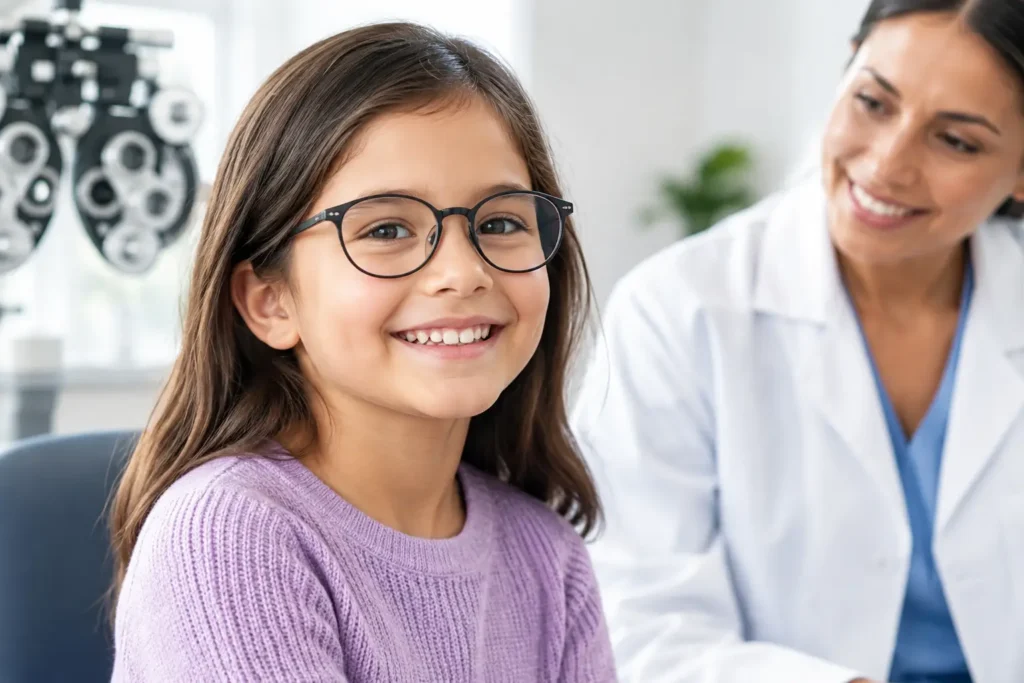
A child who moves closer to the TV, loses their place when copying from the board, or says distant signs look blurry may need more than a new pair of glasses. Nearsightedness, also called myopia, often changes throughout childhood. Myopia management for children is a proactive approach that aims to slow that progression while keeping day-to-day vision clear and comfortable.
For parents, the goal is not to make vision care feel complicated. It is to understand what is changing, why it matters, and which options may suit your child’s eyes, routine, and comfort level. A thorough pediatric eye exam provides the starting point for those decisions.
Why childhood myopia deserves attention
Myopia happens when the eye grows too long from front to back, causing distant objects to appear blurry. Glasses or contact lenses correct the blur, but traditional correction alone does not necessarily slow the underlying change in eye growth.
A small prescription change may not sound urgent. However, myopia can progress quickly in some children, particularly during the elementary and middle school years. Higher levels of myopia later in life are associated with a greater risk of certain eye-health concerns, including retinal problems, glaucoma, cataracts, and myopic macular degeneration. Slowing progression during childhood can therefore be meaningful for both clearer vision now and healthier eyes over time.
Myopia is influenced by more than one factor. Family history matters: children with one or two nearsighted parents have a higher likelihood of developing myopia. Visual habits and time spent outdoors may also play a role. That does not mean a parent caused their child’s myopia, or that simply limiting screens will stop it. It means the best plan looks at the child as a whole, rather than focusing on a single habit.
Myopia management for children begins with measurement
A child may need an updated prescription long before they mention blurred vision. Kids are remarkably adaptable. They may sit closer, squint, or assume everyone sees the same way they do.
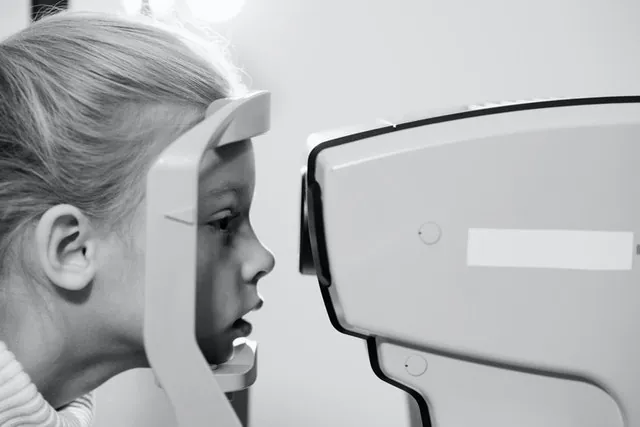
During a comprehensive eye exam, an optometrist checks much more than visual acuity. The exam may assess prescription changes, eye coordination, focusing ability, and the health of the front and back of the eye. For a child with myopia or a strong risk of developing it, tracking eye length can also help provide a clearer picture of how the eye is growing.
That baseline matters. A treatment recommendation should reflect your child’s age, prescription, rate of change, eye health, family history, and readiness for different types of correction. Two children with the same prescription may not need the same plan.
Signs parents may notice
Distance blur is the most familiar sign, but it is not the only one. Children may squint at the classroom board or television, hold devices very close, complain of headaches after visual tasks, rub their eyes, or lose interest in activities that require clear distance vision. Difficulty seeing a coach, scoreboards, or street signs can also be easy to miss until a child has the words to describe it.
These symptoms do not always mean myopia, which is why an eye exam is more helpful than guessing based on behavior alone.
What treatment options may be considered
Myopia management is not a one-size-fits-all program, and it is not a promise that a child’s prescription will never change again. The purpose is to reduce the rate of progression where possible. Depending on the child, an optometrist may discuss one approach or a combination of approaches.
Specialized myopia-control eyeglass lenses look and feel much like everyday glasses but are designed with optics intended to help slow myopia progression. They can be a practical choice for younger children, children who are not ready for contact lenses, or families who prefer the simplicity of glasses. Frame fit matters here, especially for active children. Lenses work best when they are positioned properly and worn consistently.
Multifocal soft contact lenses are worn during the day and can provide clear vision for school, sports, and social activities. They may be a good option for responsible children who are comfortable following a hygiene routine. Parents should consider whether their child can wash and dry their hands, handle lenses carefully, and follow replacement schedules reliably. Contact lenses can offer excellent freedom, but safe wear requires consistency.
Orthokeratology, often called ortho-k, uses specially fitted rigid contact lenses worn overnight. The lenses temporarily reshape the front surface of the eye, allowing many children to see clearly during the day without glasses or daytime contacts. This can appeal to active children, but it requires detailed fitting, careful cleaning, and scheduled follow-up. It is not the right fit for every child or every family routine.
Low-dose atropine eye drops may also be considered for some children. These prescription drops are typically used at night and are intended to help slow progression. They do not replace glasses or contact lenses for clear distance vision. As with any prescription treatment, the potential benefits, side effects, dosing, and follow-up schedule should be discussed with an optometrist.
The best option is the one your child can use safely and consistently. A treatment that sounds ideal on paper but creates daily stress is rarely the best long-term choice.
Everyday habits that support healthy vision
A management plan may include practical changes at home, but lifestyle guidance should support clinical care, not replace it. Regular outdoor time has been associated with a lower risk of myopia onset and may be beneficial for children who are still developing. Aim to make outside play a normal part of the week, whether that means walking the dog, biking, visiting a park, or playing a sport.
Near work is also part of modern childhood. Reading, homework, gaming, and devices are not inherently harmful, but long, uninterrupted close work can be tiring. Encourage children to take regular visual breaks, keep reading material at a comfortable distance, and use good lighting. The familiar 20-20-20 idea can be useful: after about 20 minutes of close work, look at something farther away for 20 seconds.
Avoid framing these habits as punishment or blaming screens for every prescription change. The more helpful message is that eyes, like the rest of the body, benefit from variety, movement, and time outdoors.
Follow-up care keeps the plan on track
Myopia management works best as an ongoing conversation, not a single appointment. Follow-up visits allow the optometrist to compare prescription changes, review comfort and wear habits, check eye health, and decide whether the current strategy is doing enough.
Some children progress slowly and need only routine monitoring. Others may need more frequent reviews or an adjustment to their plan. Growth spurts, changes in school demands, and new sports or activities can all affect what feels practical. Bring up real-life concerns, such as a child avoiding lenses, struggling with drops, or repeatedly breaking glasses. Those details help shape care that actually fits your family.
At Sight Care Optometry & Optical, pediatric eye care is designed to give parents clear guidance without overwhelming them. A careful exam, thoughtful discussion of options, and eyewear that a child feels good wearing can make follow-through much easier.
If your child is squinting, moving closer to see, or needing frequent prescription updates, scheduling an eye exam is a positive next step. Early attention gives your family more choices and gives your child a clearer view of the moments that matter most.
Note: This posting is for informational purposes only and does not attempt to diagnose or recommend treatment for any condition. Please consult an optometrist if you are experiencing eyesight issues.