
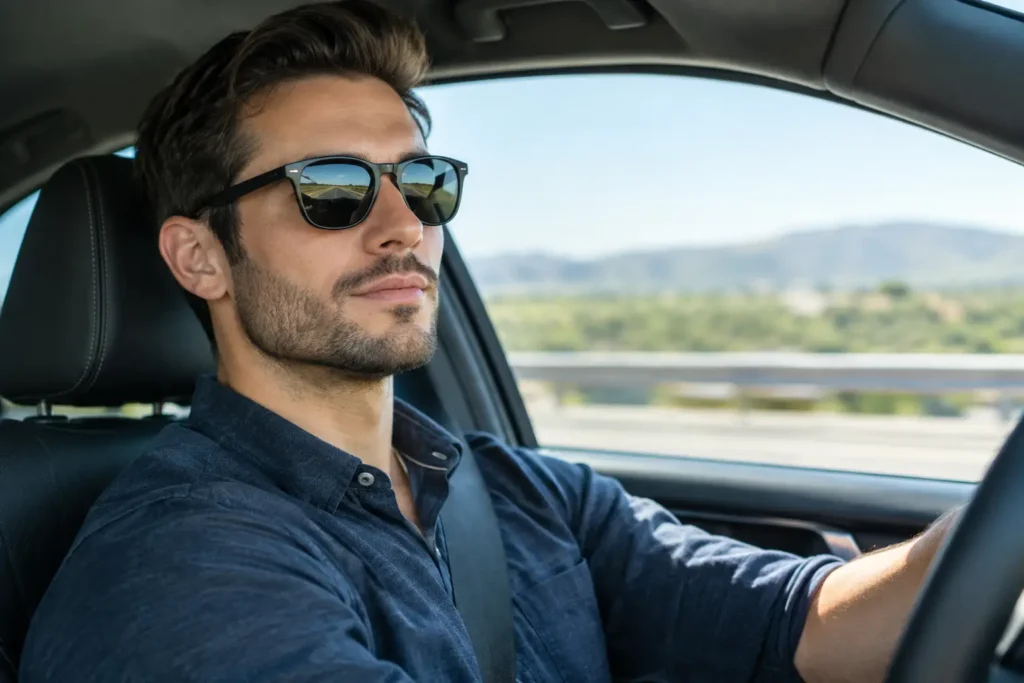
A low winter sun on the Gardiner, rain reflecting headlights after work, a bright morning school drop-off – driving places real demands on your eyes. The right prescription sunglasses for driving do more than make a sunny day feel more comfortable. They can help you see the road, traffic signals, pedestrians, and changing surfaces with clearer, more relaxed vision.
For many drivers, a pair of prescription sunglasses becomes one of the most-used pieces of eyewear they own. Choosing well means looking beyond frame color or a dark lens and considering your prescription, driving habits, light sensitivity, and the times of day you are most often behind the wheel.
Why driving sunglasses need to do more
Sun glare is not simply annoying. It can wash out contrast, make it harder to judge distance, and leave you squinting through an intersection or around a bend in the road. Reflections from windshields, wet pavement, snow, and other vehicles can be especially challenging.
A quality sunglass lens reduces bright visible light while providing full UV protection. When it is made to your current prescription, it also corrects the blur caused by nearsightedness, farsightedness, astigmatism, or age-related changes in near vision. This combination matters when you need to move your focus between the road ahead, mirrors, dashboard, and navigation display.
Comfort is a safety consideration, too. If your eyes feel tired or strained after a drive, you may be more likely to squint, rub your eyes, or avoid wearing your eyewear altogether. A properly fitted pair should sit securely, give you a wide field of view, and feel natural enough to wear every time you drive in bright conditions.
The best lens options for prescription sunglasses for driving
There is no single best lens for every driver. The ideal choice depends on when and where you drive, as well as your visual needs. During an eye exam and optical consultation, those details help guide a recommendation that is practical for your everyday routine.
Polarized lenses for reflected glare
Polarized lenses are a popular option because they reduce the harsh, horizontal glare that bounces off roads, water, snow, and car hoods. For daytime driving, they can make scenes appear more comfortable and improve the visibility of road texture and lane markings in certain conditions.
There is one useful trade-off to consider. Some drivers find that polarized lenses make certain digital dashboard displays, infotainment screens, or phone screens look dim or appear to disappear at particular angles. This does not affect everyone in the same way, and it often depends on the vehicle and screen position. Trying lenses with your own car’s display in mind can help determine whether polarization is right for you.
Lens tints that support natural vision
A very dark lens is not automatically a better driving lens. The goal is controlled, comfortable light rather than making the world unnecessarily dim. Gray and brown are common choices for a reason.
Gray lenses offer more neutral color perception, which many people appreciate for general daytime driving. Brown or copper-toned lenses can enhance contrast and may feel especially helpful in variable light, such as partly cloudy conditions or on roads with changing shade. Green tints can also provide balanced color perception and comfortable contrast.
Fashion matters, but function should lead the conversation. A frame and tint that suit your style are easier to reach for, which is exactly what you want from eyewear designed to protect your eyes on the road.
Backside anti-reflective coating
A backside anti-reflective coating is one of the most valuable additions to prescription sunglasses. Sunlight can reflect off the inside surface of a lens and into your eyes, particularly when the sun is behind or beside you. This can create distracting reflections and reduce visual comfort.
A quality anti-reflective coating on the back of the lens helps minimize that effect. It can be a small detail with a noticeable difference during a long commute or a bright afternoon drive.
Photochromic lenses: convenient, with limits
Photochromic lenses darken when exposed to UV light outdoors and lighten indoors. They are convenient for people moving between indoor and outdoor settings, but most vehicle windshields block much of the UV light that activates them. That means standard photochromic lenses may not darken enough inside the car to replace dedicated sunglasses.
Some photochromic options are designed to respond to visible light as well, so they may offer more tint behind a windshield. Still, they usually do not become as dark as a true sunglass lens. If you regularly drive in bright daylight, dedicated prescription sunglasses are often the more reliable choice.
Frame fit matters more than most drivers expect
A beautiful frame that slides down your nose, pinches behind your ears, or leaves large gaps at the sides can quickly become frustrating. For driving, a secure fit and useful coverage are just as important as the lens itself.
Look for a frame that provides a wide, unobstructed view. Thick temples may be fashionable, but they can create blind spots in your peripheral vision if they are too wide or poorly positioned. A slightly wrapped frame can offer better side protection from sunlight, although stronger wrap styles may require specialized lens designs for the clearest vision.
The frame should also work with your prescription. Higher prescriptions, progressive lenses, and certain lens materials can affect thickness, weight, and edge appearance. Personalized frame styling is helpful here because it balances the look you want with the optics your eyes need.
If you wear progressive lenses
Drivers who use progressive lenses need a thoughtful lens design. You need clear distance vision through the upper portion of the lens, while still being able to glance down at the dashboard or navigation system. A well-fitted progressive lens can make those shifts feel more natural.
Measurement accuracy is particularly important. The position of the frame on your face, where your pupils sit within the lenses, and how the frame tilts can all affect your vision. If you have ever felt that you needed to lift your chin to see the road clearly through progressive sunglasses, the issue may be the lens design, fit, or measurements rather than the idea of progressive sunglasses itself.
Do not use nighttime sunglasses
Even lightly tinted sunglasses are not intended for night driving unless your eye care professional has specifically advised otherwise. At night, your eyes need as much available light as possible, and a tinted lens can reduce your ability to see pedestrians, road hazards, and details in low-contrast areas.
If nighttime glare from headlights is bothersome, schedule an eye exam rather than relying on heavily marketed “night driving” glasses. Glare can be connected to an outdated prescription, dry eye, cataract changes, or other eye health concerns. The right solution depends on the cause.
When to update your driving eyewear
Consider an updated pair if you find yourself squinting in daylight, struggling to read signs until you are close, noticing more glare than usual, or experiencing headaches after driving. Changes in vision can happen gradually, so it is easy to adapt without realizing how much effort your eyes are putting in.
An annual comprehensive eye exam helps confirm that your prescription is current and gives your optometrist an opportunity to assess eye health. This is especially valuable if you have diabetes, glaucoma risk, cataracts, dry eye symptoms, or a family history of eye disease.
At Sight Care Optometry & Optical, the goal is to help you find eyewear that feels like it was chosen for your actual life, whether that means city commuting, weekend drives, school pickups, or time at the cottage. Bring your questions, describe the glare or discomfort you notice, and be honest about how you use your glasses. The best pair is one that helps you feel clear, comfortable, and confident each time you get behind the wheel.
Note: This posting is for informational purposes only and does not attempt to diagnose or recommend treatment for any condition. Please consult an optometrist if you are experiencing eyesight issues.