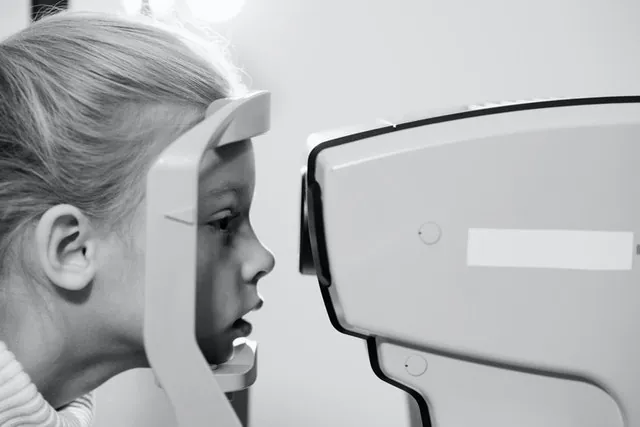


The decision to have LASIK is about more than the procedure itself. You also need clear answers before surgery, attentive follow-up afterward, and a care team that knows your eyes well. LASIK co-management with optometrist care brings those pieces together, allowing you to work with a local eye doctor while a refractive surgeon performs the procedure.
For many patients, this arrangement makes the experience feel more personal and practical. Your optometrist can help determine whether laser vision correction may be appropriate, coordinate with the surgical center, and monitor your recovery close to home. The surgeon remains responsible for the surgery, while your optometrist provides the ongoing eye care support that helps you feel informed at every stage.
What LASIK Co-Management With an Optometrist Means
LASIK co-management is a collaborative approach to laser vision correction. It typically involves two professionals: an optometrist who provides pre-operative and post-operative care, and an ophthalmologist or refractive surgeon who performs the laser procedure.
Your optometrist begins by assessing your overall eye health and vision needs. This is not simply a matter of measuring your prescription. A thorough evaluation may include checking the stability of your prescription, corneal health and shape, tear film quality, pupil size, and signs of conditions that could affect healing or visual results.
If LASIK appears to be a reasonable option, your optometrist can refer you to a qualified surgeon for a surgical consultation. The surgeon performs additional measurements, discusses the recommended procedure, and ultimately decides whether you are a surgical candidate. After treatment, follow-up visits may take place with your local optometrist according to the surgeon’s care plan.
This shared model does not mean care is divided or disconnected. When it is handled well, it creates a coordinated path from the first conversation through recovery.
Why Local Follow-Up Care Matters
The days and weeks after LASIK are an important part of the process. Your vision may improve quickly, but healing is still underway. You may experience temporary dryness, glare, halos around lights, fluctuations in vision, or sensitivity to light. These symptoms can be expected for some patients, but they should still be monitored thoughtfully.
Having an optometrist nearby can make follow-up more convenient, especially when your schedule is full or when travel to a surgical center is less practical. Your optometrist can check that your corneas are healing as expected, review your medication instructions, and answer questions that may arise between visits.
Just as importantly, your optometrist has a baseline understanding of your eye health. If you have a history of dry eye, contact lens discomfort, allergies, or a higher prescription, those details are useful when discussing what to expect before and after surgery.
At Sight Care Optometry & Optical, the goal is to make complex eye care feel approachable. Patients considering LASIK can expect a careful conversation about their visual needs, eye health, and the practical realities of recovery – not pressure to choose a procedure that may not suit them.
The Pre-LASIK Evaluation Is About More Than Your Prescription
A common misconception is that anyone who wears glasses or contacts can simply choose LASIK. In reality, candidacy depends on several factors, and the right answer is sometimes to wait or consider a different option.
Your prescription should generally be stable. If your vision has changed significantly over the past year, surgery may be postponed until it stabilizes. Your corneas must also be healthy and have suitable thickness and shape for the procedure being considered. Certain corneal conditions, active eye infections, significant dry eye, uncontrolled diabetes, pregnancy, and some autoimmune conditions may require added caution or make LASIK less appropriate.
Age matters, too, but perhaps not in the way people expect. LASIK can reduce dependence on glasses for distance vision, yet it does not prevent presbyopia, the age-related change that makes close-up tasks more difficult. A person in their 40s or beyond may still need reading glasses after LASIK. For some patients, monovision may be discussed, where one eye is corrected more for distance and the other more for near tasks. It can be helpful for the right person, but it is not comfortable or desirable for everyone.
An optometrist can help you think through these trade-offs in the context of your actual routine. If you spend long days on screens, drive frequently at night, play sports, or rely on precise close-up vision for work, those details deserve to be part of the conversation.
Dry Eye Deserves Special Attention
Dry eye is one of the most important issues to address before LASIK. The procedure can temporarily worsen dryness because corneal nerves need time to recover. If your eyes already feel gritty, burn, water excessively, or become uncomfortable in contact lenses, treating the surface of the eye first may improve comfort and support more reliable pre-operative measurements.
That does not automatically rule out laser vision correction. It does mean a patient-first approach may involve pausing, treating dry eye, and reassessing rather than rushing toward a surgery date.
What Follow-Up Visits Usually Include
Your surgeon will provide the specific schedule for your procedure, but post-operative care often begins shortly after surgery and continues over the following weeks and months. During these appointments, your optometrist may assess visual acuity, examine the cornea, check for inflammation, and make sure the healing process is on track.
You will also receive guidance on using prescribed drops, avoiding eye rubbing, returning to exercise or swimming, and protecting your eyes from irritants. A clear plan matters because recovery is not identical for every patient. One person may feel ready to work the next day, while another may need more time before prolonged screen use or nighttime driving feels comfortable.
If something does not feel right, do not assume it is simply part of healing. Increasing pain, sudden vision changes, worsening redness, discharge, or a marked decline in vision should be reported promptly to your eye care team. Co-management works best when patients know who to contact and feel comfortable speaking up.
Questions Worth Asking Before You Commit
A good LASIK consultation should leave room for questions, not just a quick decision. Ask what procedure is being recommended and why it fits your eyes. Ask about the expected visual outcome, potential side effects, recovery timeline, and what happens if you need an enhancement later.
It is also wise to ask about your long-term vision. LASIK changes the cornea, but it does not eliminate the need for routine eye exams. You can still develop cataracts, glaucoma, retinal concerns, or changes related to aging. Continuing regular comprehensive eye care remains one of the best ways to protect your vision.
Cost and convenience are reasonable questions as well. Be sure you understand what is included in the surgeon’s fee, which post-operative visits are covered, and whether your insurance offers any vision-correction benefits. Clear expectations can prevent surprises and help you focus on recovery.
Choosing Care That Fits Your Life
The best LASIK experience is not defined only by a day without glasses. It is defined by whether the decision fits your eyes, your lifestyle, and your comfort with the expected outcomes. Some people are excellent candidates and love the freedom laser vision correction provides. Others are better served by updated glasses, contact lenses, dry eye treatment, or another refractive option.
A trusted optometrist can help you approach that choice with perspective. Start with a comprehensive evaluation, share what you hope to change about your vision, and be honest about any concerns. Thoughtful guidance before surgery can make every step afterward feel more reassuring.
Note: This posting is for informational purposes only and does not attempt to diagnose or recommend treatment for any condition. Please consult an optometrist if you are experiencing eyesight issues.