
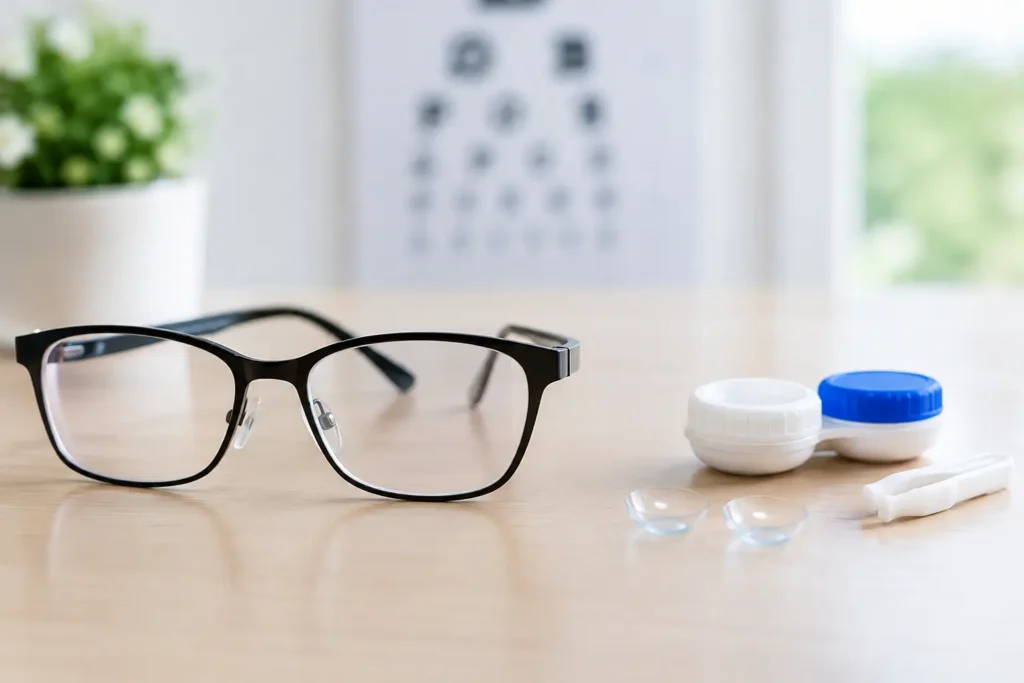
A prescription may look like a string of numbers and abbreviations, but it is a carefully tailored plan for how you see. The difference between an eyeglass prescription and a contact lens prescription comes down to where the correction sits, how it interacts with your eye, and what is needed to keep your vision clear and comfortable. Even if the numbers appear similar, eyeglasses and contact lenses are not interchangeable.
For families, busy professionals, and anyone switching between frames and contacts, understanding that distinction can prevent a frustrating order, uncomfortable lenses, or vision that simply does not feel quite right.
What an eyeglass prescription is designed to do
An eyeglass prescription is written for lenses that sit in a frame in front of your eyes. The lenses are typically positioned about 12 millimeters away from the surface of the eye, although the exact distance can vary by frame fit and facial features.
Your prescription may include sphere, cylinder, and axis values. Sphere corrects nearsightedness or farsightedness. Cylinder and axis address astigmatism, which occurs when the eye does not focus light evenly. Some prescriptions also include prism, which can help the eyes work together more comfortably, or an add power for reading and other close tasks.
The optical team also uses measurements that may not appear on the prescription itself. Pupillary distance, for example, helps center the lenses in front of your pupils. Frame shape, lens material, lens thickness, and how the frame sits on your face all affect the final result. This is why choosing eyewear is more than selecting a frame you like. It is also about creating a pair that gives you crisp vision and feels natural from morning to night.
The difference between an eyeglass prescription and a contact lens prescription
A contact lens sits directly on the tear film over the front of your eye, rather than resting in a frame several millimeters away. Because of that change in position, the power needed in a contact lens can be different from the power in eyeglasses, particularly with stronger prescriptions.
A contact lens prescription also includes details that are specific to the lens itself. These usually include the lens brand or manufacturer, base curve, diameter, power, and expiration date. For toric contact lenses used to correct astigmatism, the prescription may also include cylinder and axis. Multifocal contacts can include additional information for near vision.
The base curve describes the curvature of the back of the lens. The diameter describes the lens size. Both measurements help determine how the lens aligns with the shape and movement of your eye. A lens that is too tight, too loose, or poorly centered can blur vision and cause irritation, even when the power is correct.
In other words, a contact lens prescription is both a vision prescription and a fitting prescription. It identifies the specific lens that was evaluated for your eyes.
Why the numbers may not match
It can be surprising to see a different power on your contact lens prescription than on your eyeglass prescription. This does not necessarily mean your vision changed. It often reflects the fact that glasses and contacts correct vision from different distances.
For lower prescriptions, the numbers may be the same or very close. For higher levels of nearsightedness or farsightedness, the difference can be more noticeable. This adjustment is sometimes called a vertex conversion. Your optometrist accounts for it when determining which contact lens power will provide the clearest vision at the surface of the eye.
Astigmatism adds another layer. A contact lens must not only have the right power, but it must remain stable enough on the eye for its axis to stay in the proper position. Toric lenses are designed with features that help them orient correctly, but each design behaves a little differently. One brand may provide sharper vision or better comfort than another, even when the printed prescription values look alike.
Fit matters as much as prescription power
Contact lenses are medical devices, and a clear view is only one part of a successful fit. During a contact lens fitting, your optometrist evaluates your eye health, tear film, corneal shape, eyelid position, and how the lens moves after you blink. They also ask about your daily routine, screen time, work environment, sports, allergies, and any dryness or irritation you experience.
Someone who spends long days at a computer may benefit from a different lens material or replacement schedule than someone who wears contacts occasionally for social events. A child beginning contact lens wear may need a lens option that is simple to handle and supports healthy habits. A patient with dry eye may need a more moisture-friendly material, reduced wearing time, or treatment for the underlying dryness before contacts feel consistently comfortable.
This individualized approach is why it is not a good idea to choose a contact lens based only on a glasses prescription or a friend’s recommendation. A lens can be available in the right power and still be the wrong lens for your eyes.
What happens during a contact lens exam
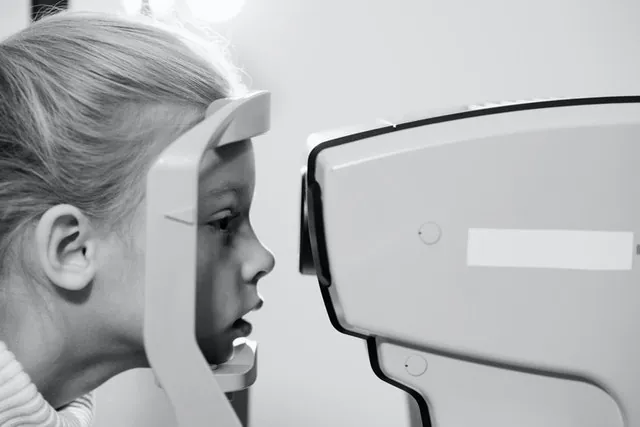
A comprehensive eye exam checks your vision and overall eye health. If you would like to wear contacts, a contact lens evaluation is usually added to assess fit and determine the appropriate lens parameters.
Your optometrist may take corneal measurements, review your current lenses if you wear them, and place trial lenses on your eyes. After allowing the lenses time to settle, they check your vision and examine how the lenses align, move, and interact with the surface of the eye. You may be asked to try the lenses at home before the prescription is finalized.
For new wearers, the visit also includes practical training. You will learn how to insert and remove lenses, clean reusable lenses properly, and follow the recommended replacement schedule. These steps protect both comfort and eye health.
Can you use an eyeglass prescription to buy contact lenses?
No. An eyeglass prescription cannot be used as a substitute for a contact lens prescription. It does not contain the required fitting information, such as base curve, diameter, approved lens brand, or material. It also may not have the correct contact lens power.
Likewise, a contact lens prescription is not a complete replacement for an eyeglass prescription. It is tailored to a specific contact lens design and does not include all the measurements needed to make accurately centered eyeglass lenses.
Many people benefit from having both. Eyeglasses provide a dependable option for early mornings, late nights, allergy days, or times when your eyes need a break. Contacts can offer freedom for sports, special occasions, and a wider field of view. The best choice often depends on your lifestyle, comfort, and eye health rather than a one-size-fits-all rule.
A few common questions
Do I need a new contact lens prescription every year?
Your prescription’s expiration and recommended follow-up schedule depend on your eye health, lens type, and your optometrist’s guidance. Regular visits help catch subtle changes in vision, dryness, corneal health, and contact lens fit before they become more disruptive.
What if my contact lenses suddenly feel uncomfortable?
Remove them if they are causing pain, redness, persistent blur, light sensitivity, or discharge. Do not try to push through discomfort or wear a lens longer in hopes that it will settle. Contact your optometrist for advice, especially if symptoms continue after the lenses are removed.
Can I sleep in my contact lenses?
Only wear lenses overnight if your optometrist has specifically prescribed a lens approved for that use and has discussed the risks with you. Sleeping in lenses can increase the risk of eye infection, even with lenses designed for extended wear.
Clear, comfortable vision should feel easy, whether you prefer a statement frame, everyday glasses, contact lenses, or a combination of both. A thoughtful exam and fitting give you the confidence that your correction is made for your eyes and your life.
Note: This posting is for informational purposes only and does not attempt to diagnose or recommend treatment for any condition. Please consult an optometrist if you are experiencing eyesight issues.